




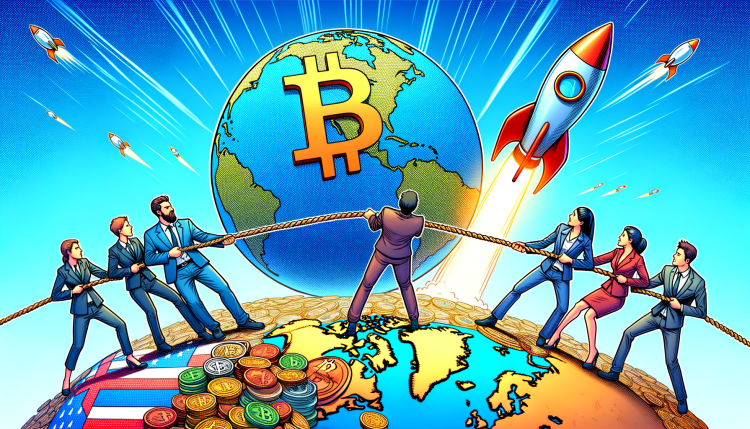
Economic Challenges and Bitcoin’s Role
Analysts predict that inflation, geopolitical tensions, and high debt will create significant global economic challenges due to trade policies, particularly those from the U.S. under President Trump.
Shift to Bitcoin
With traditional financial systems under stress, alternative currencies like Bitcoin could become more attractive as safe assets.
Price Impact
This increased interest and demand for Bitcoin as a store of value might lead to significantly higher prices over time.
Elaboration
There is a growing concern among financial analysts about the current economic environment. Factors such as rising inflation, geopolitical conflicts, and the massive accumulation of debt are straining the existing global financial systems. These challenges are amplified by the trade policies enacted during President Donald Trump’s tenure, which have introduced new complexities to international economic relations. Such tensions could potentially destabilize the economic order that currently predominates.
Against this backdrop, Bitcoin and similar digital currencies are being viewed differently by a segment of financial analysts. According to Jeff Park, an analyst from Bitwise, the uncertainty and potential instability generated by these economic conditions could lead to a growing acceptance of Bitcoin. As traditional currencies and economies face devaluation due to inflationary fiscal and monetary policies, people might begin to look toward alternative stores of value. Bitcoin, with its decentralized nature and limited supply, presents itself as a viable option for those seeking to protect their wealth.
Finally, Park theorizes that as this shift occurs, the demand for Bitcoin will increase drastically. This heightened demand will likely drive the prices higher, creating a significant shift in how Bitcoin is perceived in the financial community. Such a shift would not only affirm Bitcoin’s role as a legitimate store of value but might also reinforce its position in the global markets. This movement could present significant opportunities and challenges in cryptocurrency adoption and financial asset management.
Hot Take
The dynamics of global economies are shifting more rapidly than ever, and cryptocurrencies like Bitcoin are at the heart of this trend. As traditional financial structures show signs of stress, the appeal of Bitcoin as an alternative store of value could grow, potentially transforming it from a speculative investment to a widely recognized financial asset. Whether Bitcoin can truly step up to fill this role remains to be seen, but the evolving economic landscape could be a catalyst for its much broader acceptance. Now more than ever, keeping a close eye on the interaction between geopolitical shifts and financial innovations is crucial for both investors and policymakers.