



AI Avatars in Court: A New Frontier
Key Points:
- A defendant, Jerome Dewald, used an AI avatar to represent himself during a court hearing in New York, leading to a judge expressing dissatisfaction.
- This situation highlights the emerging role of AI technology, and its potential misuse, within legal settings.
- The increased use of AI in various fields raises questions about its application in legal proceedings and the ethical implications.
Article Expansion
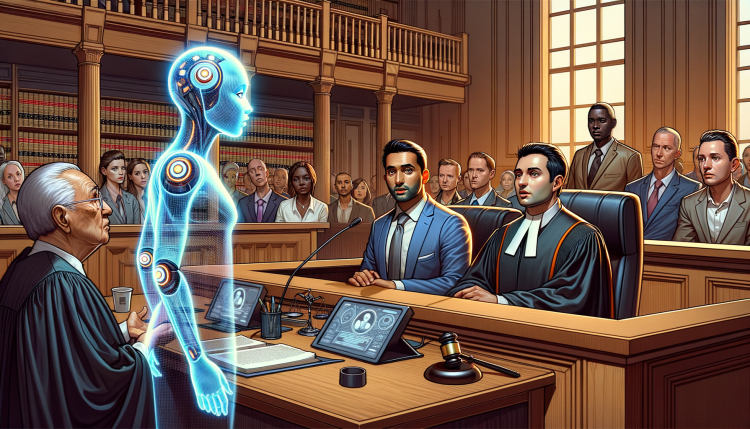
In a recent New York appeals court hearing, a peculiar incident occurred when Jerome Dewald, involved in an employment dispute, opted to use an AI-generated avatar to represent himself. This avatar acted as a digital stand-in, providing Dewald’s legal arguments during a video hearing. The judge presiding over the case was not pleased, expressing discontent with being misled by the AI representation instead of having direct interaction with Dewald.
The use of AI technology in the courtroom is still a relatively new phenomenon, and this particular instance has sparked discussions on the appropriateness and impact of such tools in legal proceedings. Using AI avatars can potentially distort the judicial process, as it may lead to complications in assessing the actual intent, honesty, and demeanor of the parties involved. Though technology continues to evolve, the ethical guidelines and standards that accompany its use in serious settings like courtrooms are still developing.
As AI technology becomes increasingly prevalent across various sectors, including the legal field, it brings up several questions about its application and limitations. The incident of using an AI avatar in court illustrates the need for creating clear boundaries and regulations on how AI can be appropriately integrated into the judicial system. While AI can enhance efficiency in certain areas, its deployment must be carefully considered to ensure fairness and integrity in delivering justice.
Hot Take
The introduction of AI avatars in courtrooms, as shown in this New York case, challenges the traditional norms of legal proceedings and highlights the necessity for evolving legal standards to keep pace with technological advancements. While AI can offer innovative solutions, the potential for misuse underscores the importance of establishing clear guidelines and ethical boundaries to preserve the fairness and integrity of the justice system. As technology continues to advance, societies must tread carefully, balancing innovation with ethical and practical considerations.