



Asian Currencies React to Political Developments
Key Points:
- Asian currencies slightly recovered after reacting to former President Trump’s suggestion of a 60% tariff on Chinese goods if re-elected.
- The Chinese yuan hit a 19-month low due to concerns over worsening U.S.-China relations and weaker-than-expected Chinese economic data.
- Markets adjusted after the initial shock, but broader fears of a trade war and slowing global growth continue to pressure Asian currencies.
What’s Happening:
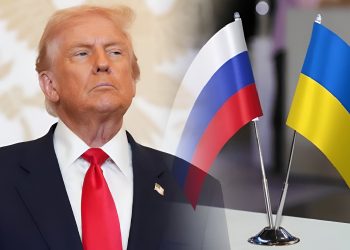
Asian currencies, including the Chinese yuan, steadied slightly after falling initially when former U.S. President Donald Trump proposed a heavy 60% tariff on Chinese imports if he wins the 2024 election. Fears of a renewed trade war rattled markets temporarily, causing many investors to shift money into safer assets like the U.S. dollar. Trump’s comments came amid already tense U.S.-China relations and sparked concern about how a potential new tariff regime might disrupt global trade.
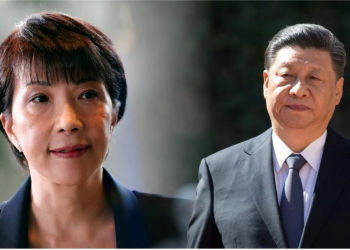
China’s yuan fell to a 19-month low against the U.S. dollar due to a combination of factors. Besides Trump’s statement, China’s recent economic data—in particular retail sales and industrial production—came in weaker than expected. Investors are worried that China’s post-COVID recovery is losing momentum. The People’s Bank of China (PBoC) tried to stabilize the currency by setting the midpoint fixing stronger than expected, but it was not enough to stop market-driven depreciation pressures. The USD/CNY is trading around 7.23 as of today (May 24, 2024), reflecting those concerns.
Market-wise, other Asian currencies like the Japanese yen, South Korean won, and Thai baht also faced volatility. The Japanese yen (JPY/USD), already weakened due to Japan’s ultra-loose monetary policy, traded at around 156.84 per dollar. Meanwhile, the U.S. dollar index (DXY) stayed firm above 104, maintaining strength amid global geopolitical uncertainty. Investors are now closely watching upcoming U.S. inflation data and Federal Reserve signals, which could influence whether the dollar remains strong or starts to decline.
Hot Take:
This situation serves as a reminder of how sensitive markets are to political developments, especially between key economies like the U.S. and China. While Trump’s tariff comments are not yet policy, markets have started pricing in the risk, showing how the prospect of trade barriers can instantly shake investor confidence. If you’re trading or investing in forex or emerging markets, it’s crucial to track U.S. political developments as much as local data. In addition, this is a good lesson in how interconnected the world’s economy really is—news in Washington can directly affect your holdings in Asia, commodities, or global portfolios.
Stay alert: With more major political events (especially U.S. presidential campaigns and global central bank meetings) slated for the second half of 2024, volatility in currency markets is likely to remain elevated.