



US Dollar Weakens Amid Economic Concerns
Key Points:
- The US Dollar weakens due to rising fears of a potential economic slowdown or recession.
- Investors move money into safer assets like the Euro and Japanese Yen.
- Economic data, like weak job and manufacturing numbers, increases bets that the US Federal Reserve may cut interest rates.
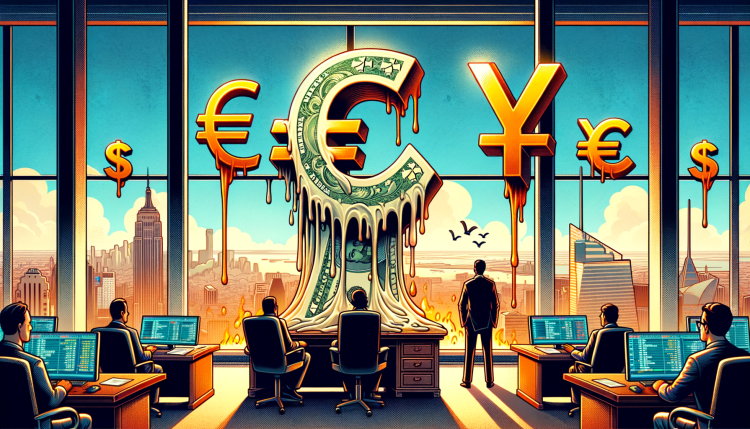
The US Dollar has lost some of its strength recently as worries grow about a possible recession in the United States. New economic data shows that parts of the economy, such as job growth and the manufacturing sector, are slowing down. This has made investors nervous because it could signal that the country is entering a period of economic weakness. As a result, people are expecting the U.S. Federal Reserve to possibly lower interest rates to help support the economy.
When investors feel uncertain about the economy, they tend to look for safer places to put their money. In this case, many are buying the Euro and the Japanese Yen — currencies that are often seen as stable during times of economic trouble. Demand for these currencies has increased as the outlook for the U.S. Dollar becomes less certain. The Euro has strengthened thanks to slightly better economic news from the Eurozone, while experts also note that Japan’s safe-haven status becomes more attractive during global financial jitters.
From a technical standpoint, the Dollar Index (DXY), which measures the value of the U.S. Dollar against a basket of other currencies, has fallen to near 104.50 levels. The EUR/USD pair is approaching 1.0870, while USD/JPY has dropped below 156.00—both signs of the Dollar losing ground. In commodities, gold prices have risen above $2,370 per ounce, showing increased investor interest in assets that tend to hold value during uncertain times. Meanwhile, oil prices fell for the second day in a row due to worries that a slowdown in the U.S. could dampen global energy demand.
Hot Take:
This recent trend is a classic case where bad news for the economy can actually be good news for financial markets—at least temporarily. As investors brace for slower growth, they’re adjusting their strategies by moving into safer assets and betting on central banks to step in with rate cuts. If you’re someone with investments in currencies, commodities, or even stocks, it’s smart to stay updated on global economic data and market reactions. Times like these show how understanding “safe haven” assets can help protect your finances from unexpected downturns.