



🗞️ Key Takeaways:
- JPMorgan Downgrades Emerging Market Currencies: JPMorgan has downgraded its outlook on emerging market (EM) currencies due to the U.S. raising tariffs against Chinese goods, signaling increased geopolitical and trade tensions.
- Currencies Affected and Market Reactions: Currencies like the Korean won, Taiwan dollar, and Thai baht are particularly vulnerable to the tariff developments, reflecting investor worries about slowing global trade and supply chain disruptions.
- Safe-Haven Shift and Technical Pressures: Investors are moving funds into the U.S. dollar and other “safe-haven” assets in response to the risk-off sentiment, pushing down the value of emerging currencies and increasing volatility.
📰 Content Breakdown:
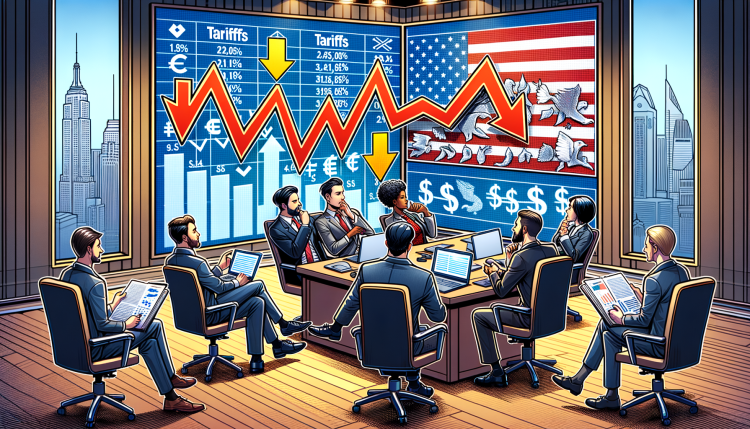
JPMorgan analysts announced a downgrade to their outlook on emerging market currencies, citing the renewed risk from the U.S. increasing tariffs on Chinese imported goods. This shift in policy raises fears of a new chapter in the U.S.-China trade rift, which could negatively affect international trade flows, particularly in Asia. The U.S. recently imposed new tariffs on Chinese EVs, batteries, solar cells, and other strategic goods, potentially impacting the broader economy by reducing trade activity and investor confidence in regions closely tied to China’s exports.
This announcement has implications for several Asian export-dependent countries. JPMorgan specifically noted that the Korean won (KRW), Taiwan dollar (TWD), and Thai baht (THB) are most at risk due to their interconnected roles in global supply chains and economic dependence on China. These currencies have seen increased selling pressure as investors react to the growing chances of disruptions in global trade. The shift may weaken export growth from these nations, challenging their economic forecasts for 2024.
Traders and analysts are watching technical levels closely. In particular, the USD/KRW pair touched 1,370 level, reflecting a weakening won, while the USD/THB went above 36.00 – both signaling strong bearish sentiment for these currencies. With the U.S. dollar gaining strength due to higher expected interest rates and geopolitical tensions, emerging currencies are seeing reduced demand. Technical indicators such as moving averages and RSI also suggest continued pressure. Meanwhile, the DXY (U.S. Dollar Index) has moved higher, recently trading around 104.6. Gold also edged higher above $2,340 per ounce this week, acting as a safe-haven amid global jitters.
🔍 Market Impacts (as of latest updates):
- USD/KRW: Currently trading around 1,374, nearing its 2024 highs.
- USD/THB: Riding above 36.1, indicating continued weakness for the Thai baht.
- DXY (U.S. Dollar Index): Hovering at 104.6, reflecting global dollar demand.
- Gold: Trading above $2,340/oz, benefiting from safe-haven flows.
- Taiwan Dollar (TWD): Under pressure, tracking weaker Chinese economic indicators.
📘 Additional Takeaway/Must-Know:
This action by JPMorgan says a lot about how macroeconomic events like tariffs can ripple through currency markets. If you’re a trader or investor, it’s key to understand how trade tensions can influence currency pairs, especially those tied to trade-heavy economies like South Korea or Thailand. Also, longer-term investors might consider how these developments could slow economic growth in Asia, possibly impacting future earnings for region-focused companies.
🔥 My Hot Take:
This isn’t just about currency – it’s about the global ripple effects of strained trade relationships. The renewed U.S.-China tariff battle not only adds pressure on emerging market economies but also forces a rethink of global supply chains. For anyone involved in forex, global equities, or commodities, this is a red flag moment to watch closely. The markets are signaling caution, and when JPMorgan changes its stance, it usually reflects foundational shifts in the global economic climate.