




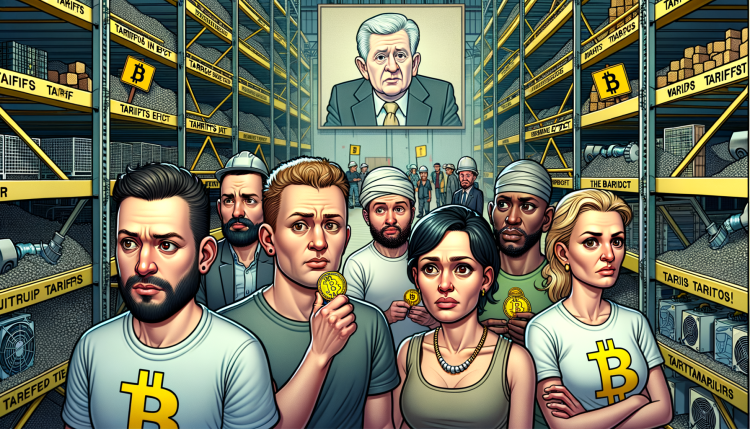
US Chip Manufacturing Gap and Its Impact on Bitcoin Mining
Kristian Csepcsar from Braiins suggests that it might take ten years for the US to be on par with leading nations in advanced chip manufacturing.
Impact of Trump’s Tariffs
New tariffs by President Trump could put extra pressure on the Bitcoin mining industry, affecting both US-based and global operations.
Supply Chain Challenges
Despite having Bitcoin mining firms like Auradine, the US struggles to create a fully domestic supply chain for chip manufacturing.
According to Kristian Csepcsar of Braiins, the US has a long road ahead to catch up in cutting-edge chip manufacturing, perhaps requiring a decade to equal the capabilities of leading countries in the field. Chips are essential components in all sorts of technology, including Bitcoin mining equipment. Without the ability to manufacture chips domestically, businesses in the US rely heavily on international suppliers to fill the technology gap, which can be a vulnerability for the industry.
A new set of tariffs introduced by President Donald Trump could exacerbate challenges for the Bitcoin mining ecosystem. These tariffs impose a 10% tax on all countries exporting to the US, and they introduce additional taxes on major trading partners. These economic measures might increase costs and disrupt supply chains for Bitcoin mining hardware manufacturers and operators. Not only could this make operations more costly in the US, but it could also have global repercussions, as companies adjust to the financial impact of the trade policies.
Despite some progress, the US continues to face hurdles in developing a self-sufficient supply chain for chip manufacturing. Companies like Auradine contribute to domestic Bitcoin mining hardware production, but according to Csepcsar, it remains challenging to source all the required materials and components within the US. This reliance on international supply chains can make the industry susceptible to geopolitical tensions and policy changes, such as the ones brought by the new tariffs.
Hot Take: While tariffs are intended to protect domestic industries, they can also lead to unintended consequences, particularly in tech sectors like Bitcoin mining that rely heavily on global supply chains. The US needs to find a balance between encouraging domestic production and maintaining beneficial international trade relationships to ensure the industry thrives. Exploring innovations in chip technology and investing in domestic capabilities may offer a strategic advantage in the long run, but will require substantial investment and time to come to fruition.